Coffee Table Economics

Photo by Patrick Tomasso on Unsplash
Welcome to the long awaited, excitedly expected first edition of my new blog (which I have procrastinated on for two long years). I had the idea to write this blog before graduating college, where I studied chemical engineering and economics. I’ll keep the backstory brief but I feel it’s a little necessary, as I want to invite you all (Emma and Mom) to partake in the same discovery I came across to inspire this idea in the first place. When I was first introduced to economics I have to say I was a little underwhelmed. I was two years into my career as a chemical engineer and I knew it wasn’t my calling, but I craved the challenge and the analytical mind I would forge by putting myself through the experience. I encountered economics by accident, by a simple misunderstanding “wait, there’s no finance minor? Well, let’s try business economics, it seems similar enough!” little did I know I was stumbling into what would become my favorite subject. Interest rates, supply and demand, so many graphs, something about underwear being elastic (iykyk). But buried underneath all the supply and demand calculations there was a simple assumption that just didn’t sit quite right with me. Economists always assumed that people were rational… The same people that I would see later that evening competing to see how many hotdogs and beers they could consume in 10 minutes, which was surely not a rational decision.
People assume economic theory is all about big overarching topics, governance of global monetary policy, banking, wages, global trade, the dreaded interest rate, and so much more which politicians love to rave about fixing. Economics in reality is so much broader than that. Questions like what leads an individual to get married, divorced, commit a crime, take care of their aging parents, and even deciding what to have for dinner. If we’re getting technical, economics means the study of how individuals use limited resources to produce, distribute, and consume. Anything and anyone can be an “individual”, everyone has limited resources, and anyone can make the choice to produce, distribute or consume. So let’s go ahead and summarize that definition to the study of individual choice. That’s a definition you could apply to any decision you can measure.
Here’s where the lesson starts. Economists believe that all “Rational individuals” will always make the choice that maximizes their utility (Utility is economist lingo for happiness, pleasure, personal benefit, etc.). This means in the case of marriage, that an individual will only marry if he believes it will increase his utility. For marriage this made sense to me, I didn’t question it. But the same assumption was applied to research on why individuals would commit a crime. Economic theory assumes that an individual would commit a crime if the action of doing so would increase their utility. In doing that calculation, theory assumes that individuals who commit a crime consider the consequences in their decision, they weigh the probability of getting caught, the gravity of a potential sentence, and the payout of said crime. That’s where I started to question the assumption. Surely no criminal stops to think how long he’ll be in jail if he steals that Gatorade from the 7-Eleven. Surely nobody is running that math.
Well, one guy was. In the 1960s an economist named Gary Becker was running late to Columbia University to give a student an oral exam. He finally arrived but he couldn’t find parking. His options were a parking lot a few blocks away that cost money, or to park illegally right next to where he needed to be. So he did what economists do and ran the numbers, the odds of getting a ticket, the size of the fine, and the cost of the lot. He parked illegally. To his surprise, he found that he did not get a ticket! On the walk to the exam it hit him that the city had probably run the same calculation from the other side when they decided how often to check the meters and how much to charge for a parking violation. He walked into that exam room and instead of administering the exam he had planned he asked the poor student to solve a problem he had thought of ninety seconds earlier. That parking spot turned into “Crime and Punishment: An Economic Approach” (1968), and eventually into a Nobel Prize.
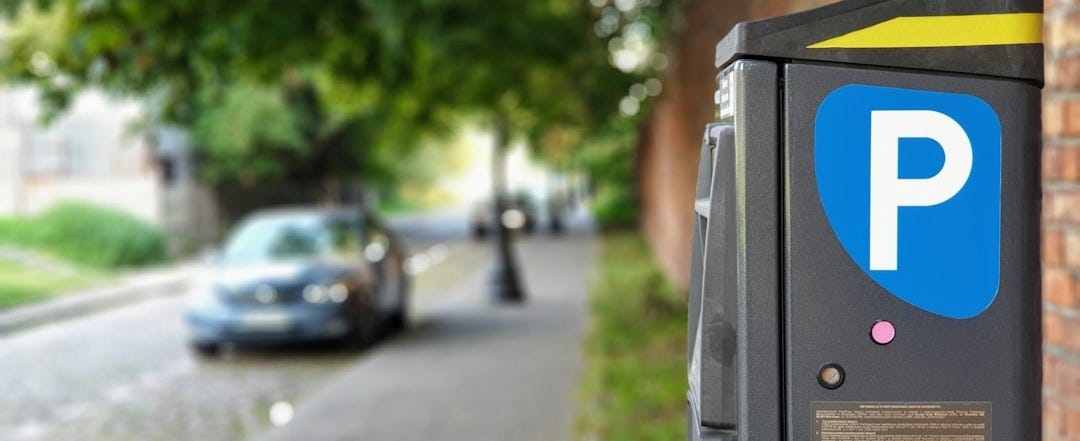
Photo by Stanisław Gregor on Unsplash
These types of questions are what got me. I was hooked by the fact that I could look at every interaction in my life, every decision, through the lens of economics. I could see the imperfectness of humanity, their biases and heuristics, and do my best to make sense of it. But most importantly, economics introduced me to a field of endless questions. A field where the bravest and smartest aren’t afraid of the words “I don’t know”, where asking the right question is more important than finding an answer, and where we get to do our best to understand why we do what we do. So welcome, and I hope you stick with me on this journey with lots of questions and lots of coffee table economics.
P.S. Decades of research went into testing whether criminals actually behave like Becker’s parking spot. How many people actually do the math before risking that parking ticket. It turns out that Becker was half right. People really do respond to the odds of getting caught. What barely moves them is the thing every politician campaigns on, the length of the sentence. Longer prison terms turn out to be a weak deterrent. More cops on the street is a strong one. Becker guessed that people commit crimes by weighing consequences, and it turns out they do, they just weigh a completely different consequence than the one we keep legislating.
Originally published on Substack. Subscribe there to get new essays by email.